
Could microbes be the next generation of skincare ingredients?
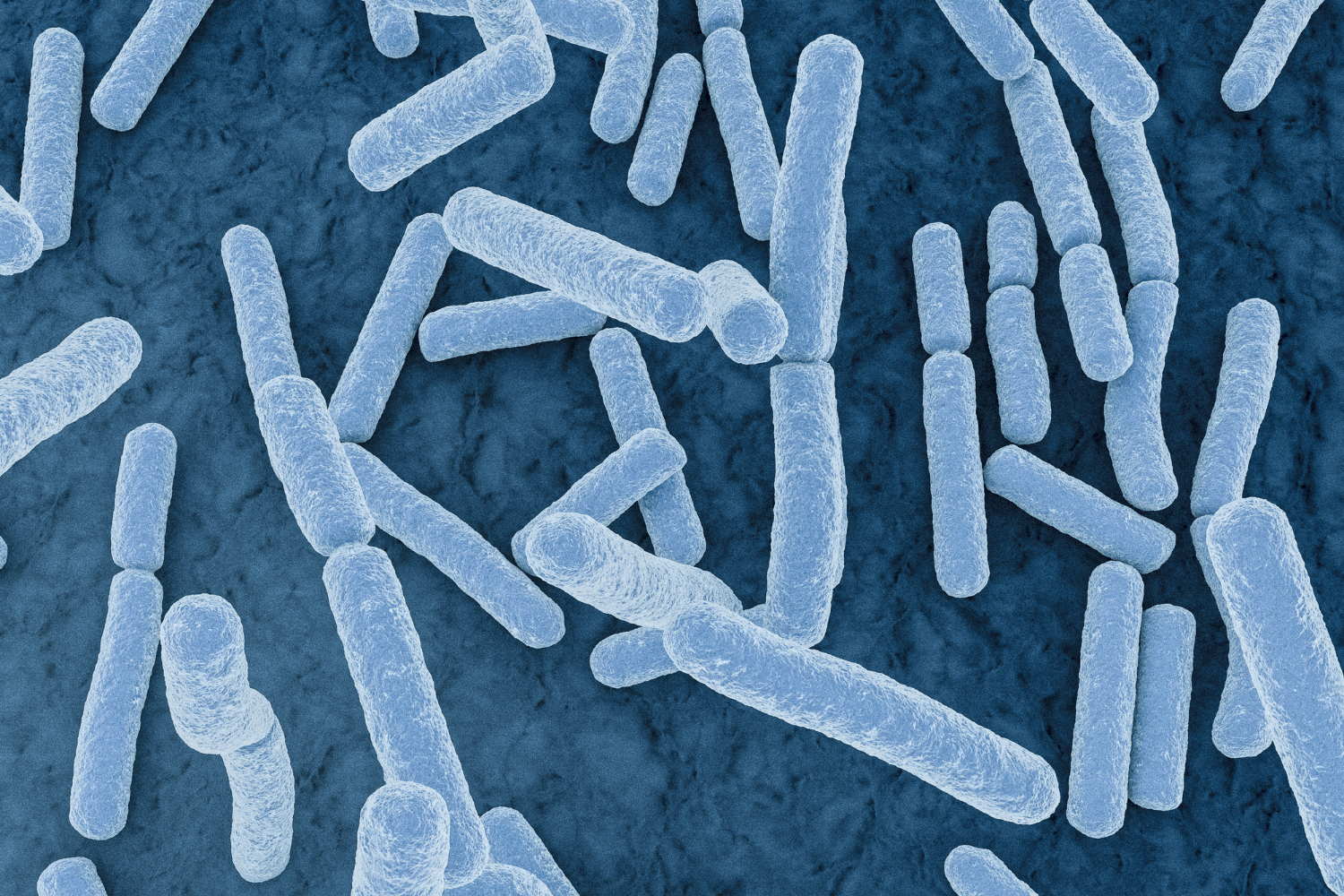
For years, skincare innovation has focused on finding the next plant extract, peptide or synthetic active. But a new category of biological ingredients is beginning to attract attention: the products of microorganisms themselves.
At BiomeCentric, we’re exploring what this could mean for the future of cosmetic formulation through extracellular vesicles (EVs) derived from defined probiotic bacteria. Our latest development, evaBiome® eternaLift™, brings together microbiome science, controlled fermentation, and extracellular signalling in a formulation-ready cosmetic ingredient.
From microbes to bioactive ingredients
Extracellular vesicles are naturally produced by cells and can carry biological cargo including proteins, lipids, metabolites, and other signalling molecules.
Rather than using live bacteria, BiomeCentric’s approach uses controlled fermentation to generate EVs from three defined human-origin probiotic strains: Lactiplantibacillus plantarum, Lacticaseibacillus rhamnosus, and Lactobacillus crispatus.
The resulting three-species EV preparation is designed for cosmetic formulations targeting hydration, elasticity, surface radiance, and the visible signs of ageing.
It represents a different way of thinking about microbiome innovation — moving beyond the familiar idea of “good bacteria” and towards the biological products and signals generated by microorganisms.
Early clinical results
So, what does this mean for the skin?
In a 28-day controlled intra-individual split-face study, 22 participants aged 39–59 applied a formulation containing 1% eternaLift™ to one side of the face twice daily, with a matched vehicle control applied to the other side. After 28 days, the eternaLift™-treated skin showed greater improvements than the control across all six measured endpoints.
Hydration improved by 36.0%, compared with 12.4% for the control, while surface gloss and radiance improved by 35.9%, compared with 17.0%. Elasticity improved by 39.2%, compared with 20.6%. The study also measured visible signs of ageing, with a 35.9% reduction in crow’s-feet count and a 31.3% reduction in cumulative crow’s-feet length, compared with 3.2% and 4.7% respectively for the control. Average crow’s-feet depth decreased by 7.3%, while the control showed a 1.0% increase.
Statistically significant differences were reported across all six measured endpoints.
A new direction for microbiome-led beauty
The significance of this approach extends beyond a single ingredient.
As our understanding of the microbiome develops, there is growing opportunity to explore microorganisms not only as living organisms, but as biological systems capable of producing useful molecules and signals. For formulators, this creates an opportunity to explore microbiome science through ingredients that are practical, formulation-ready, and produced through controlled bioprocessing.
As Dr Tristrom Winsley, Chief Scientific Officer at BiomeCentric, explains:
“The conversation around skin ageing is becoming much more sophisticated. We are looking beyond simply correcting what we see on the surface and towards modulating the intricate biology of the host and of the microbiome that supports healthy, resilient skin.”
With evaBiome® eternaLift™, BiomeCentric is exploring what happens when microbiome science and extracellular signalling come together — and what that could mean for the next generation of cosmetic ingredients.
Ready to explore what’s next in skincare?
If you're looking to develop the next generation of skincare, BiomeCentric can help turn microbiome science into formulation-ready innovation. From microbiome-led ingredients to formulation development, and manufacturing, we bring the science, technology and expertise to help bring your next beauty innovation to life.
Get in touch to discover how BiomeCentric can help you develop your next skincare innovation.